


Pristine, untouched snow stretches across the landscape as snowmobiles carve fresh paths through the silent winter terrain. Drones capture these moments from above, revealing sweeping aerial perspectives of the vast scenery and the thrill of the ride. This new frontier for outdoor filming offers breathtaking cinematic possibilities, but it demands careful attention to safety.
Our guide provides several practical tips for snowmobiling while safely capturing aerial footage with drones.
Check Local Drone Regulations Before Riding
Before launching your drone, it’s essential to understand the rules that govern the airspace you’re entering. These regulations aren’t just bureaucratic red tape; they exist to protect people on the ground and safeguard sensitive wildlife habitats. Plus, many popular snowmobiling regions have strict limits on where drones can operate, and ignoring these rules can leave you with fines.
In some areas, authorities restrict or outright ban flights in national parks, near ski resorts, or within designated wildlife zones. They often set these rules to address seasonal concerns, such as reducing stress on animals during winter when their energy reserves are low.
Pro Tip
Spending a few minutes checking local authority websites or using drone-focused apps like B4UFLY can help you confirm where you’re allowed to fly and avoid accidental violations.
Choose a Drone Suitable for Cold Weather
Cold temperatures put extra strain on electronics, and drones feel that impact more than most devices since their batteries and sensors are directly exposed to the environment. The frigid air can drastically shorten battery life and affect the performance of sensitive components. When selecting a drone for winter use, look for models with features designed to handle the cold, such as:
- Weatherproof or ruggedized designs that protect internal components
- Winter-rated batteries that perform better in low temperatures
- GPS stabilization systems that help the drone hold its position in windy or unstable conditions
These features give your drone a better chance of operating reliably in harsh conditions. You should also carry multiple spare batteries and keep them warm in an insulated pocket until you are ready to fly.
Map Out Your Snowmobile Route Ahead of Time
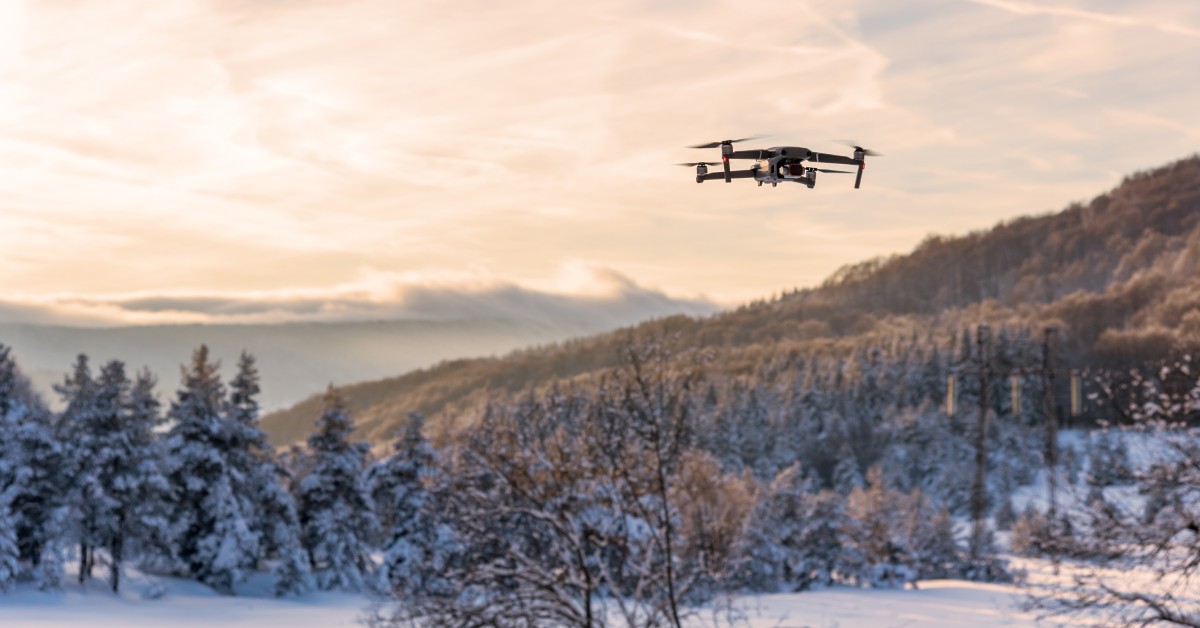
You should always map out your snowmobiling route, or at least an approximate one, whether you have a drone or not. This allows you to identify potential hazards like dense tree lines, hidden cliffs, power lines, and steep, unstable slopes.
Additionally, a well-planned route helps you scout key vantage points for those perfect cinematic shots. You can mark locations on a map where the light is best or where the terrain offers a dramatic backdrop for your ride.
Keep the Drone Within Line of Sight
Maintaining a direct visual line of sight with your drone helps you retain control and react to sudden obstacles. This is important because snowy landscapes can be deceptive; the uniform whiteness can create visual illusions or whiteout conditions that make it difficult to judge distance and orientation.
Adding bright decals or markers can make your drone easier to track in snowy conditions. Likewise, flying when the sun is at an angle offers another boost in visibility, as shadows help define the drone’s shape.
Avoid Flying in Heavy Snow or Blizzards
Flying a drone during active snowfall might seem like a cool idea, but it’s very risky. Heavy snow or blizzard conditions pose several threats to your equipment and your ability to fly safely. Snowflakes can accumulate on propellers, which disrupts their balance and efficiency. They can also interfere with the drone's sensors, leading to erratic behavior or a complete loss of control.
Visibility is another major concern; in a blizzard, you can easily lose sight of the drone, increasing the likelihood of a crash or flyaway. Instead, you should film on clear days with calm winds or just after a fresh snowfall has blanketed the landscape.
Communicate Your Drone Plan With Riding Partners
When you're snowmobiling with others, coordination is everything. Before you start filming, make sure everyone in your group knows the plan. Discuss where you'll be flying the drone, what kind of shots you're aiming for, and what signals you'll use to communicate. This shared awareness helps prevent accidents, like someone unexpectedly riding into the drone's flight path.
Moreover, clear communication can help improve your footage. When your partners know you’re about to capture a tracking shot, they can maintain a steady speed, allowing you to get a smooth, professional-looking video.
Capture Cinematic Angles for Dynamic Shots
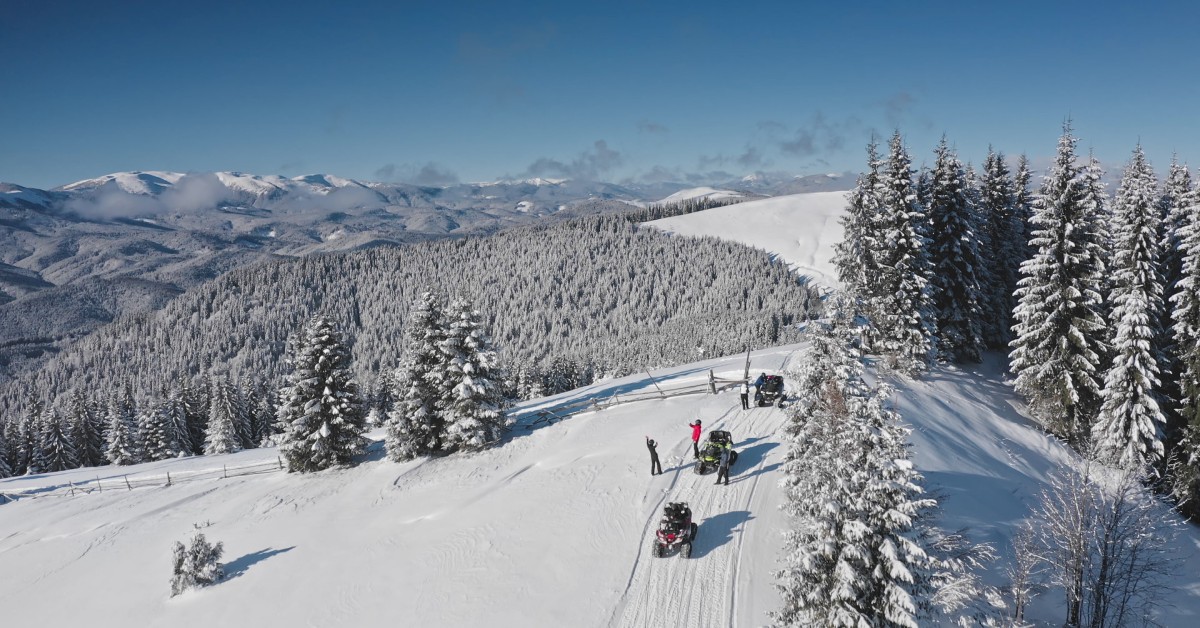
With safety protocols in place, you can focus on the creative side of filming. Drones offer incredible opportunities to capture dynamic angles that tell a story. Experiment with different shot types to add variety and excitement to your video.
- Low sweeps: Fly the drone just above the snow to create a sense of speed and immersion.
- High flyovers: Capture the scale of the landscape with a high-altitude shot that follows the trail.
- Tracking shots: Follow alongside or behind the snowmobile to showcase the action in real-time.
You should also pay attention to your camera settings. Snow can trick a camera’s light meter, resulting in footage that is too dark or has blown-out highlights, where the snow appears as pure white with no detail. Manually adjust your exposure and white balance to capture the scene beautifully.
Do a Practice Run To Get Comfortable Controlling the Drone
Another tip for safely snowmobiling with drones and capturing aerial footage is to do a few practice runs with your drone. Find a safe, open area away from obstacles and other people before you hit the main trail. This trial flight allows you to get a feel for how the drone responds in the cold and how wind affects its stability.
Pro Tip
You can also use this time to test different camera angles, practice emergency maneuvers like quick landings, and become familiar with the drone's limitations.
Stay Aware of Your Surroundings
Piloting a drone requires focus, but you can’t lose track of what’s happening around you. Constantly scan your environment for changes in snow conditions, unexpected terrain features, wildlife, and other riders. This awareness is your first line of defense against accidents.
It's helpful to take periodic breaks from flying to stop, look around, and reassess your surroundings. This pause gives you a chance to adjust your flight path and double-check that your entire operation remains safe for you, your group, and anyone else sharing the trail.
Ready for Your Ride?
By carefully planning, practicing, and constantly focusing on safety, you’ll be well-equipped to capture your own epic winter journeys from a stunning new perspective.
Adrenaline Outdoors offers outdoor adventure rentals in Ririe, Idaho. With a snowmobile rental, you can explore pristine trails without the hassle of owning your own machine. Proper preparation and the right mindset turn every ride into not just a thrilling journey, but an opportunity to create memories from a perspective few get to see.
More Recent Stories

